

Living along the Texas coastline offers beautiful views, coastal breezes, and vibrant communities like Corpus Christi. But that same coastal environment that makes the area attractive also creates one of the harshest climates in the country for residential roofing systems. Many homeowners are surprised to learn that the lifespan of a roof near the Gulf is often significantly shorter than manufacturer estimates. Understanding why that happens can help you protect your investment and avoid costly surprises.
Why Coastal Roofs Age Faster
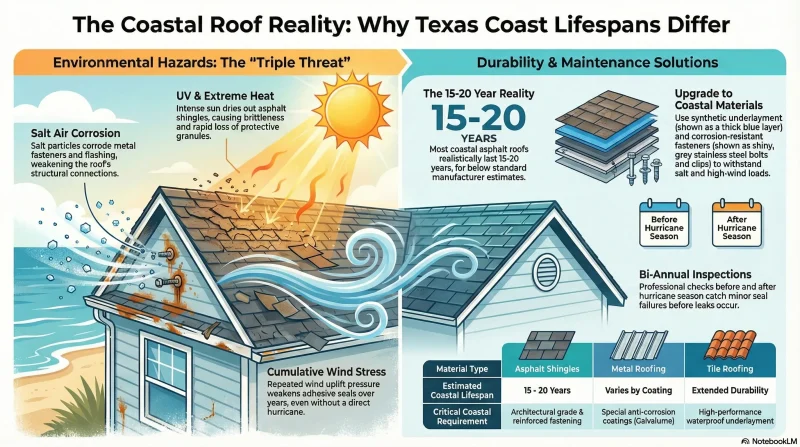
Roofing materials are typically rated under controlled conditions that do not reflect the realities of coastal Texas weather. Along the Gulf Coast, roofs face constant exposure to intense ultraviolet radiation, high humidity, salt-laden air, heavy rain, and seasonal tropical systems. Over time, this combination accelerates wear in ways that inland homes simply do not experience.
Salt air is especially damaging. Microscopic salt particles travel inland and settle on roofing components. These particles can corrode metal fasteners, flashing, and ventilation systems, weakening structural connections. The National Oceanic and Atmospheric Administration explains how salt and moisture accelerate corrosion in coastal regions, contributing to premature material breakdown. You can learn more about salt air and corrosion effects through resources from National Oceanic and Atmospheric Administration at https://oceanservice.noaa.gov.
Heat is another major factor. Texas summers regularly push roof surface temperatures well beyond ambient air temperatures. Prolonged UV exposure dries out asphalt shingles, causing them to become brittle and lose protective granules. Once granule loss begins, shingles deteriorate rapidly, reducing both wind resistance and waterproofing capability.
Wind and Storm Impact on Longevity
The Texas Coast sits in a region highly susceptible to tropical storms and hurricanes. Even in years without a direct hurricane strike, strong thunderstorms and seasonal systems generate sustained high winds. These winds create uplift pressure, especially along roof edges and corners. Over time, repeated stress weakens adhesive seals and fastening systems.
The Insurance Institute for Business and Home Safety provides research on how wind uplift affects roofing systems and why edge detailing is critical in storm-prone regions. Their findings show that repeated moderate wind exposure can gradually reduce a roof’s overall lifespan, even if no major damage is immediately visible. More information about wind-resistant construction can be found through Insurance Institute for Business & Home Safety at https://ibhs.org.
For coastal homeowners, this means the lifespan of a roof is not just determined by a single hurricane event. It is shaped by years of cumulative wind stress that slowly compromises materials.
Average Lifespan by Roofing Material on the Texas Coast
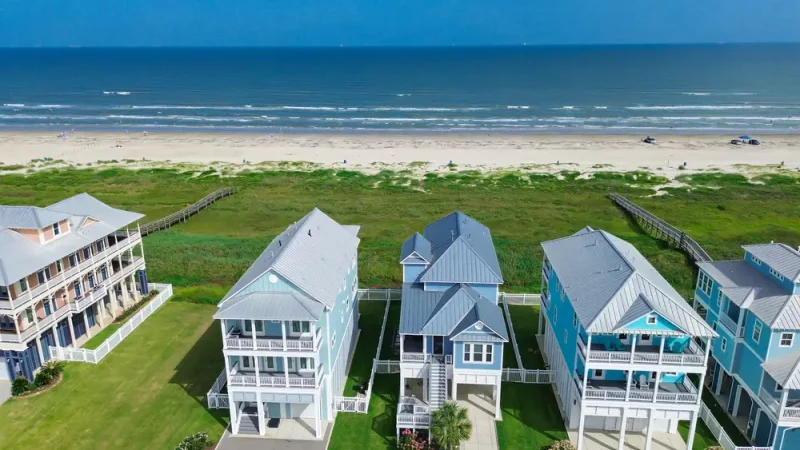
While manufacturers may advertise longer performance periods, real-world expectations near the coast are often different.
Asphalt composition shingles, the most common residential roofing material, may be rated for several decades under ideal conditions. On the Texas Coast, many asphalt roofs realistically last between fifteen and twenty years depending on installation quality and maintenance. Architectural shingles tend to perform better than basic three-tab shingles due to their heavier weight and stronger adhesive bonds.
Metal roofing can offer improved longevity in coastal settings, but only when properly coated and installed with corrosion-resistant fasteners. Galvalume or specially coated aluminum panels generally outperform standard steel in salt-air environments. Without proper protective coatings, corrosion can shorten metal roof life considerably.
Tile roofing systems may provide extended durability, but underlayment remains a critical vulnerability. In coastal climates, the waterproof underlayment beneath tile often determines when replacement becomes necessary.
Regardless of material choice, installation quality plays a decisive role. A properly secured deck, corrosion-resistant fasteners, sealed penetrations, and high-performance underlayment can add years to a roof’s service life.
The Hidden Factors That Shorten Roof Life
Several often-overlooked factors contribute to premature roof failure along the Texas Coast.
Poor attic ventilation can trap heat and moisture beneath the roof deck. Excess heat accelerates shingle aging from below, while trapped humidity promotes mold growth and wood rot. Proper ventilation allows airflow that stabilizes attic temperatures and reduces moisture accumulation.
Inadequate flashing around chimneys, vents, and valleys is another common issue. Coastal rainstorms are often wind-driven, forcing water upward beneath shingles. Weak flashing details allow moisture intrusion that may go unnoticed until interior damage appears.
Deferred maintenance also plays a role. Minor issues such as lifted shingles or small seal failures can quickly escalate when exposed to coastal winds. Regular inspections help catch these problems before they shorten overall roof lifespan.
How to Maximize Roof Longevity on the Coast
While coastal conditions are unavoidable, homeowners can take proactive steps to extend roof performance.
Professional inspections before and after hurricane season are essential. Early detection of wind damage prevents small vulnerabilities from spreading. Routine maintenance, including sealing exposed fasteners and replacing compromised shingles, preserves structural integrity.
Choosing high-quality materials designed for high-wind regions also makes a significant difference. Synthetic underlayments offer better tear resistance and moisture protection compared to traditional felt. Corrosion-resistant fasteners help maintain deck attachment strength in salt-air conditions.
Most importantly, proper installation techniques tailored to coastal building codes are critical. Enhanced fastening patterns and reinforced perimeter detailing help combat wind uplift. In designated coastal zones, compliance with standards required by the Texas Windstorm Insurance Association ensures roofs meet wind-load guidelines necessary for insurance eligibility.
Signs Your Coastal Roof Is Nearing the End
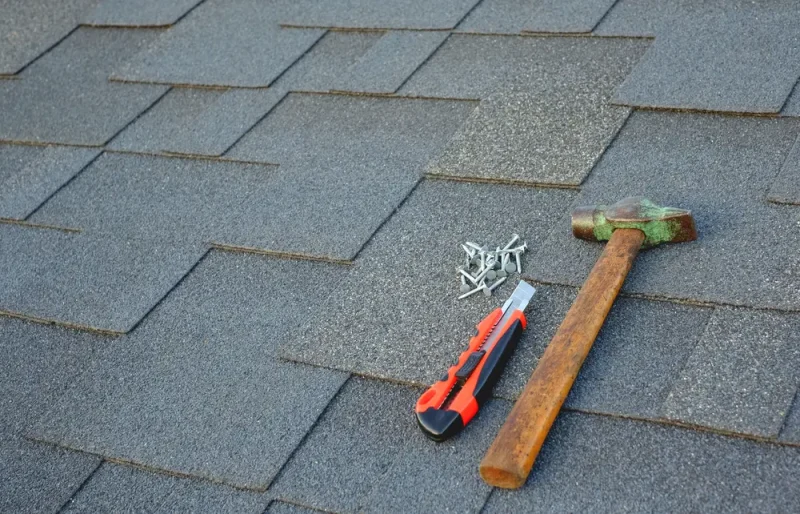
Recognizing aging indicators early can prevent interior damage and costly emergency repairs. Common warning signs include curling or brittle shingles, excessive granule accumulation in gutters, rusting metal components, persistent attic moisture, and visible sagging in roof decking.
Homeowners in communities like Corpus Christi often assume a roof will last as long as manufacturer marketing suggests. However, coastal exposure requires adjusted expectations. Waiting until active leaks appear typically means structural components have already been compromised.
Setting Realistic Expectations
The real lifespan of a roof on the Texas Coast is shaped by environment, materials, installation quality, and maintenance habits. While some roofs may exceed two decades with proper care, many require replacement sooner than inland counterparts. Viewing your roof as a dynamic system rather than a static structure helps set realistic expectations.
Investing in stronger installation methods, corrosion-resistant components, and proactive inspections pays dividends over time. A roof built and maintained specifically for coastal conditions not only protects your home but also reduces long-term ownership costs.
Ultimately, coastal living demands coastal solutions. Understanding the true lifespan of your roofing system empowers you to plan ahead, protect your property, and face each storm season with greater confidence.